Tuning Your Waterfall for the Perfect Backyard Sanctuary
The sound of your pond waterfall can make your whole backyard feel calm and peaceful or bright and lively. Many homeowners love their koi pond but feel like the waterfall is too splashy at night, then not quite strong enough during a gathering on the patio. The good news is, you often do not need a new pump to change that sound.
At PD Waterscapes, we design and care for naturalistic water features that feel like they were designed by nature. Over time we have seen how small shifts in rock placement and spillway shape can turn a harsh splash into a soft white-noise hush, or a quiet trickle into a cheerful cascade, while still protecting koi and the pond’s ecosystem. Early spring, when you are cleaning filters, trimming plants, and starting the system again, is a perfect time to listen closely and make thoughtful changes.
In this article, we will talk about how waterfall sound really works, how to shape rocks for gentle white noise, how to design livelier cascades, and how all of this ties into koi health, biological filtration, and that “always-belonged” look many Connecticut homeowners want from their water features.
How Waterfall Sound Really Works in a Backyard Pond
The sound of moving water is not random. It comes from how water leaves the spillway, how far it falls, and what it hits when it lands.
Gentle white noise usually comes from water that moves in a smooth sheet. When the water spreads out, then drops only a short distance into a calm, deeper pool, you hear more of a soft “shhh” and less of a sharp “plunk.” This kind of sound is great near bedroom windows or quiet seating areas.
Lively cascades come from water that gets broken up and mixed with air. When it hits several rock edges, small ledges, and pockets of air, you get brighter, more percussive sounds that carry farther across the yard. This can be helpful if you want to soften road noise or set the mood for outdoor gatherings.
Three main “sound shapers” matter most:
- Drop height: A 6 to 12 inch drop has a calmer, lower sound, while a 2 to 3 foot cascade is louder and higher in pitch.
- Spillway geometry: A wide, shallow lip spreads water into a gentle fan, while a narrow, deeper channel concentrates flow and increases intensity.
- Receiving pool conditions: A deep, still landing zone softens splash, while a shallow, choppy surface creates more patter and sparkle.
All of these choices affect function too. Taller drops and broken flows pull more air into the water, which helps oxygenation and supports koi and beneficial bacteria. The way water moves down the falls also shapes circulation patterns, which helps carry debris to skimmers and keeps the ecosystem side of your water features strong.
Shaping Rockwork for Gentle White Noise Waterfalls
If you want your pond to feel like a quiet retreat, the waterfall should act more like a soft outdoor sound machine than a roaring creek. Rock choice and placement are key.
For a calm, spa-like sound, we often:
- Use flat “lip” stones at the spillway so water can fan out into a thin, even sheet before it drops.
- Keep the drop height modest, around 6 to 12 inches, so the water slips into a deeper spot instead of exploding on impact.
- Place a few low, rounded stones beneath the spillway to gently deflect turbulence without tossing water out of the pond.
The look matters as much as the sound. Tucking those spillway stones into larger boulders, and blending edges with river rock and gravel, helps the waterfall feel like it has always belonged on your property instead of sitting on top of it. Along the flow path, pockets of gravel and small cobbles create quiet eddies where beneficial bacteria can grow, which supports biological filtration while keeping the sound soft and steady.
Plant choices help too. Low-growing sedges, creeping jenny, and marsh marigold can:
- Blur hard stone edges
- Catch and soften higher-frequency splashes
- Add seasonal color right along the water’s edge
- Make the whole feature look more natural and settled
Designing a Lively Cascade That Koi and Humans Love
Some homeowners prefer energy. They want a waterfall they can hear from across the yard, one that masks neighborhood noise and sets the tone for conversation, while still being kind to koi and plant life.
To create a livelier sound without changing the pump, we might:
- Narrow the spillway slightly and carve a deeper channel so water speeds up and hits with more force.
- Add intentional “break points” just below the lip so the flow splits into several mini-streams and splashes.
- Introduce one or two taller drops, around 1.5 to 3 feet, in spots where the liner and grade support it, aiming the loudest sound toward the patio and away from sleeping areas.
This extra turbulence can be very good for the pond. It boosts oxygen levels and supports beneficial bacteria, especially helpful once water temperatures rise above about 70 degrees. At the same time, it can increase evaporation and slightly cool the pond in cooler months, so it is smart to balance active cascades with calmer runs.
We like to create a mix of:
- Energetic falls for sound and oxygen
- Quiet riffles where koi can rest
- Deep, slow corners that feel safe and shaded
Even bold waterfalls can look natural when rocks and gravel are embedded into the banks and sides, tying the feature into the existing landscape rather than letting it feel like an add-on.
The Five Elements of a Healthy Koi Pond Waterfall
Every waterfall in a koi pond is doing more than making sound. It is part of a living system with five key elements working together.
Filtration
- The waterfall often works hand in hand with skimmers and biological filters.
- When filtration is sized well, you can tune sound with stone and spillway choices instead of relying on oversized pumps that waste energy and may be too loud.
Rocks and gravel
- Rock and gravel surfaces along the waterfall path give beneficial bacteria a place to live and process fish waste.
- Proper stone placement also holds shorelines in place, which cuts down on erosion and murky water that would dull both reflections and sound.
Plants
- Marginal and bog plants along the waterfall pull extra nutrients from the water, helping keep it clear.
- They soften the visual line between pond and yard so the whole water feature feels designed by nature.
Fish and bacteria
- Strong aeration and a stable flow pattern help keep oxygen levels healthy for koi, especially in warmer months.
- As bacteria populations ramp up in spring, it is a great time to confirm that the flow gives them plenty of surface area and gentle currents to do their work.
Protecting Koi While You Tune the Sound and Enjoy the Senses
When you tune your waterfall, koi health should stay at the center of every choice. As you bring your pond back to full flow after winter, any changes to rocks or spillways should be made with care. It is wise to bring flow up gradually, check that currents are not too strong in koi resting areas, and keep an eye on basic water tests like ammonia, nitrite, and pH.
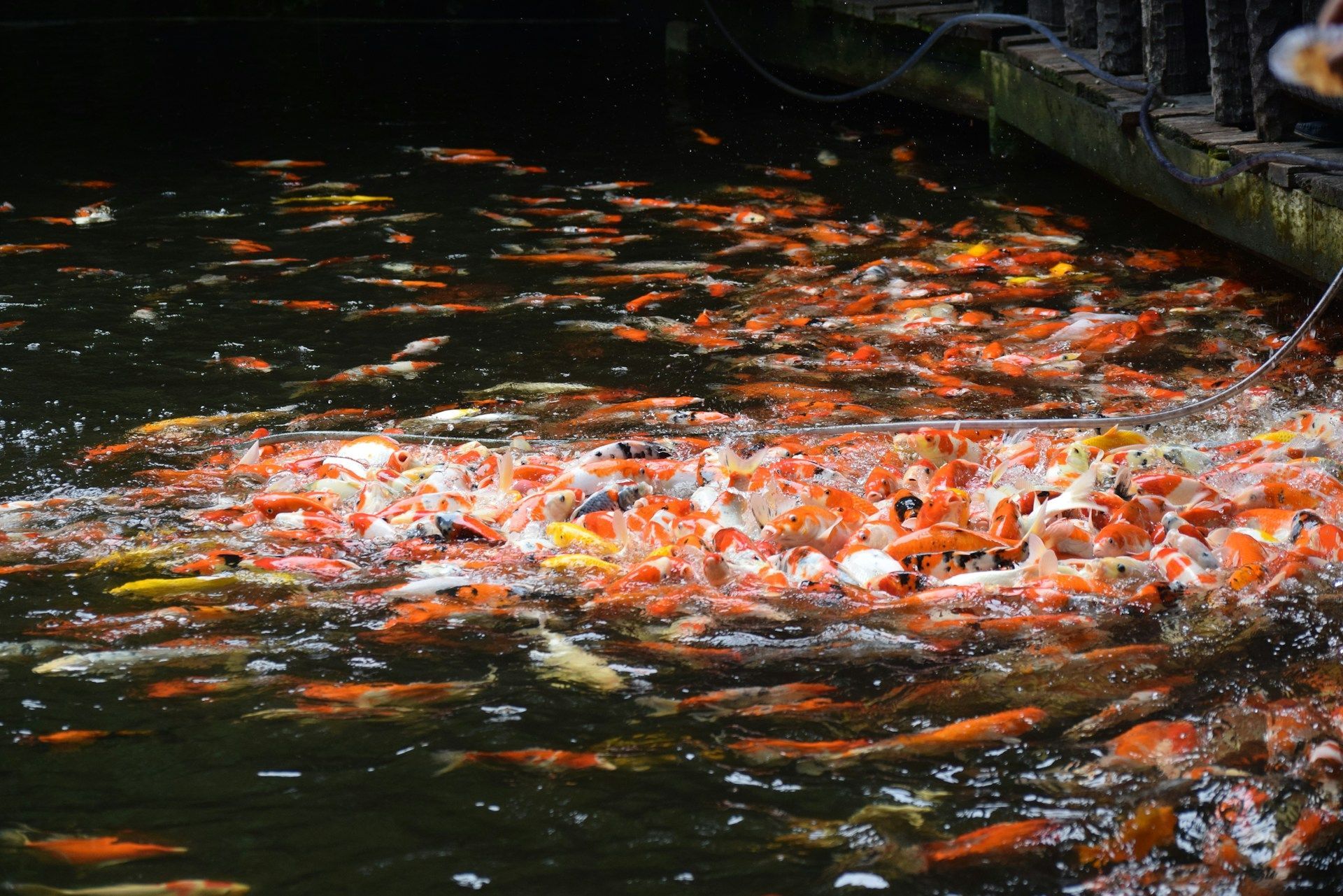
Koi like options. Even if you are building a louder cascade, it helps to preserve at least one deeper, quieter zone with slower movement. After changes, watch how your fish respond. If they begin hiding more, schooling tightly in one corner, or feeding less, it may be a sign that drop heights, splash zones, or current paths need another small adjustment.
In the end, a well-tuned waterfall is about all the senses working together. Gentle white noise can cradle an evening of reading on the patio, while a sparkling cascade can add a playful backdrop to summer cookouts or help blur nearby road sounds. Glassy sheets of water catch sunset light, while broken cascades throw dancing reflections onto stone, siding, and foliage.
When sound, movement, and reflections line up with how you actually live outside, your pond stops being just a feature and becomes a true backyard sanctuary. At PD Waterscapes, we feel that the best water features look and sound as if they have always belonged, changing with the seasons while your koi, plants, and ecosystem grow stronger year after year.
Transform Your Outdoor Space With Custom Water Features Today
Ready to bring the sound of moving water and a one-of-a-kind focal point to your yard? Explore our custom-designed
water features to see how PD Waterscapes can tailor a solution to your space and style. We will guide you from concept to completion so your new feature looks beautiful and functions reliably for years. Contact us to discuss your ideas and next steps or schedule a consultation through our
contact page.